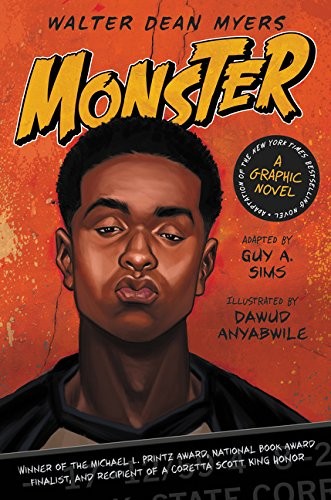
Walter Dean Myers wrote more than 110 books for young readers, including fiction, poetry, history, biography, and memoir. Monster received the first Michael L. Printz Award, while his body of work received the Margaret A. Edwards Award, five Coretta Scott King Awards, and two Newbery Honors. He also served as National Ambassador for Young People's Literature.
Titles5
Editions10
Adaptations1
Media3
Years covered1981–1999
Works on Favedom.com
As an Amazon Associate I earn from qualifying purchases.
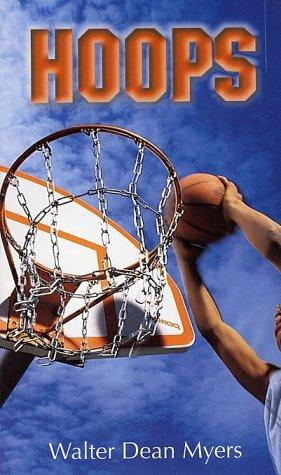
An ALA-YALSA Best Book for Young Adults New Bonus Content: -Q&A with Walter Dean Myers -Q&A with screenwriter John Ballard -Teaser chapter from On a Clear Day -Excerpt from 145th Street All eyes are on seventeen-year-old Lonnie Jackson while he practices with his team for a city-wide basketball Tournament of Champions. His coach, Cal, knows Lonnie has what it takes to be a pro basketball player, but warns him about giving in to the pressure. Cal knows because he, too, once had the chance—but sold out. As the tournament nears, Lonnie learns that some heavy bettors want Cal to keep him on the bench so that the team will lose the championship. As the last seconds of the game tick away, Lonnie and Cal must make a decision. Are they willing to blow the chance of a lifetime?
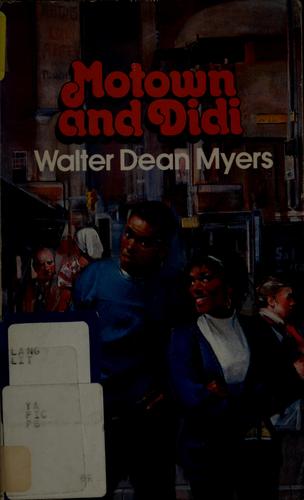
Motown lives in a burned-out building one floor above the rats, searching out jobs every day, working his muscles every night, keeping strong, surviving. Didi lives in her cool dream bubble, untouched by the Harlem heat that beats down on her brother until only drugs can soothe him. Didi escapes, without needles, in her tidy plans and stainless visions, etchings of ivycovered colleges where her true life will begin. Didi can survive inside her own safe mind, until Motown steps into her real world and makes it bearable. Together they can stand the often brutal present. What about the future?
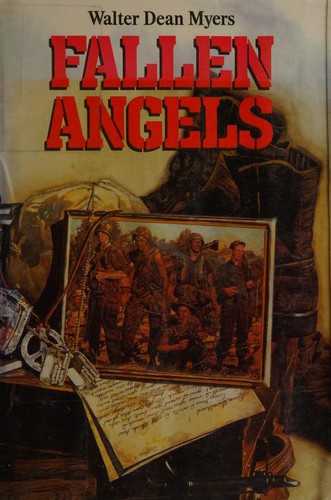
Seventeen-year-old Richie Perry leaves his Harlem high school and enlists in the United States Army during the summer of 1967. Sent to Vietnam, he spends a devastating year on active duty. Combat and uncertainty dismantle the expectations with which he entered military service, while the people serving beside him become central to survival. His experience reveals the distance between official accounts of war and the reality faced by young soldiers.
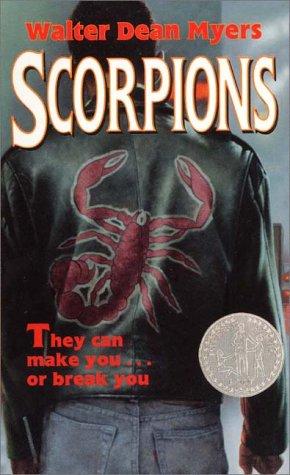
The Scorpions are a gun-toting Harlem gang, and Jamal Hicks is about to become tragically involved with them in this authentic tale of the sacrifice of innocence and the struggle to steer clear of violence. This Newbery Honor Book will challenge young men to consider their own decisions as they come of age in a complex and often frustrating society. Pushed by a bully to fight and nagged by his principal, Jamal is having a difficult time staying in school. His home life is not much better, with his mother working her fingers to the bone to try to earn the money for an appeal for Jamal's jailed older brother, Randy. Jamal wants to do the right thing and help earn the money to free his brother by working, but he's afraid to go against the Scorpions. Jamal eventually pulls free of the gang's bad influence, but only through the narrowest of escapes. Walter Dean Myers, five-time winner of the Coretta Scott King Award, sensitively explores the loyalty and love between friends faced with hard choices. Scorpions is 25 years old, but the issues of poverty and violence make it a timeless powerful read—sadly as relevant as ever. For twelve-year-old Jamal, every choice has a consequence. A Gritty Coming of Age Story: When his older brother is jailed, twelve-year-old Jamal is pressured to lead the Scorpions, a notorious Harlem gang. An Unforgettable Friendship: Jamal and his best friend, Tito, must navigate a world of danger where loyalty is tested and a single moment changes both of their lives forever. Authentic Urban Fiction: A raw, unflinching look at the cycles of poverty and violence in a vividly-drawn Harlem, penned by a master of young adult literature. A Timeless Classic for Teens: A Newbery Honor and Coretta Scott King Award-winning novel that sparks essential conversations about moral choices, community, and consequences.
Sixteen-year-old Steve Harmon is jailed and tried for his alleged role in a deadly robbery. To make sense of the courtroom and the way others see him, the aspiring filmmaker records the proceedings as a screenplay, intercut with his private journal. As witnesses offer competing accounts, Steve confronts the distance between legal guilt, public judgment, and his own understanding of himself. Walter Dean Myers's novel won the first Michael L. Printz Award and was later adapted as a feature film.